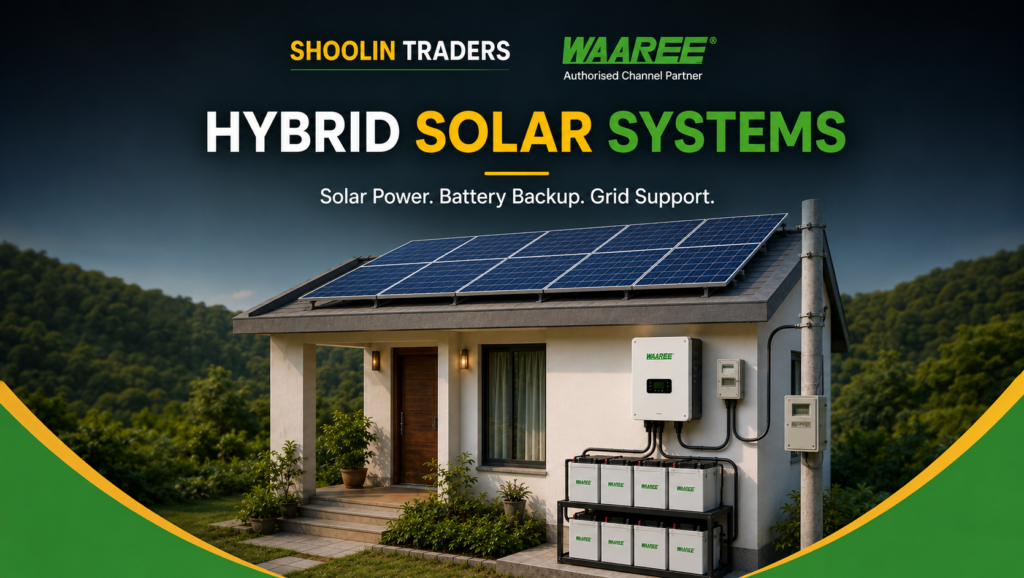

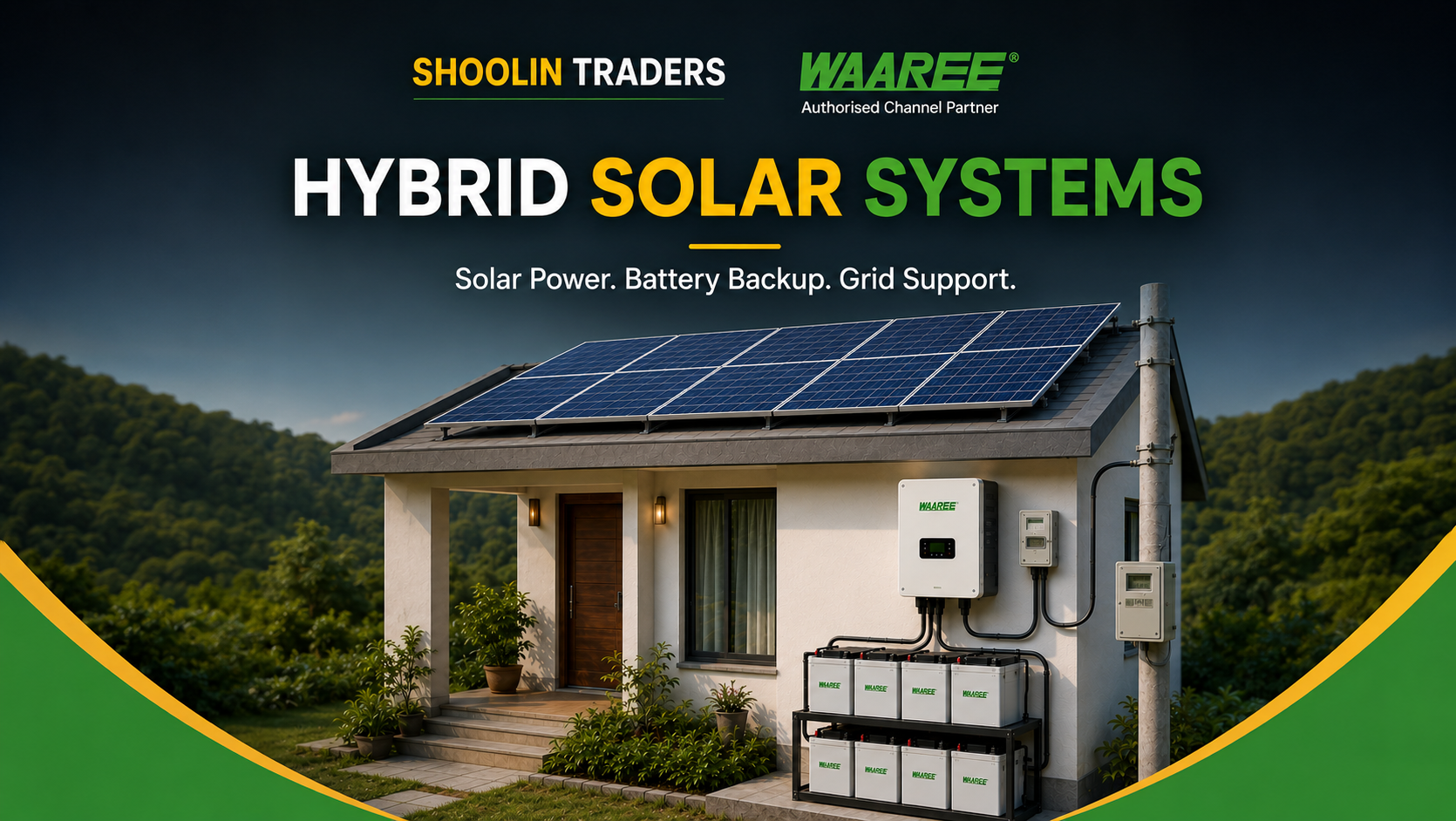
A hybrid solar system in Siliguri can combine rooftop generation with battery storage, but useful backup begins with a clear appliance list. The phrase whole-house backup can hide very different expectations. A few lights and a router require a different design from air conditioners, pumps and cooking equipment. This guide explains how to describe your needs, compare proposals and understand the limits of a battery-backed installation.
Explore the hybrid solar system in Siliguri service when you want to discuss both daytime consumption and selected outage loads. The central questions are how much power must be available at one time, how much energy is needed over the outage, and how the system will recover afterward. Panel capacity alone cannot answer all three.
Start with essential circuits
Write down every appliance that must remain available during a power cut. Include quantity, rated power, operating hours and whether appliances run together. Separate essential equipment from optional loads. For a shop, billing equipment, internet and lighting may come first. For a home, the priorities may include fans, selected lights and refrigeration. Each family or business should define its own acceptable backup level.
Tell the designer about motors and compressors because their starting requirements can differ from normal operation. Also discuss equipment tolerance for transfer interruption. Safety-critical equipment needs a specialist continuity assessment; an ordinary solar package should not be assumed to meet every emergency-power requirement. A written essential-load list gives everyone a common basis for design and testing.
Separate power from stored energy
Inverter output, commonly expressed in kilowatts, limits the power available at a given moment. Battery storage, commonly expressed in kilowatt-hours, helps determine how long supported loads can run. Increasing stored energy does not automatically increase the inverter’s ability to start or operate a heavy appliance. Conversely, a powerful inverter paired with little storage may provide only a short operating duration.
As a simple illustration, a steady 400-watt appliance group running for five hours uses 2 kWh at the loads. The battery must provide more after allowing for conversion losses, permitted discharge and reserve. This is an explanation of the calculation, not a battery recommendation. Actual appliance cycling, temperature, equipment settings and battery age can change the result.
Ask for usable battery capacity
Nominal capacity and usable capacity are different. Ask the supplier to state both and explain the operating reserve. Some storage may be held back for outages, while other capacity may be used for routine energy shifting. A larger reserve can improve preparedness but leaves less storage available for everyday use. These settings should reflect the customer’s priorities rather than remain unexplained defaults.
Review warranty conditions, permitted operating temperature, supported discharge power and replacement arrangements. Battery chemistry affects maintenance and installation requirements. Compare proposals using the same usable storage and backup load; otherwise the cheaper option may simply supply less energy. Include expected maintenance and eventual battery replacement in the ownership discussion rather than considering only the initial purchase.
Check inverter and battery compatibility
A battery described as suitable for solar does not necessarily work with every hybrid inverter. Compatibility can involve voltage range, battery-management communication, firmware and manufacturer-approved combinations. Ask for exact model numbers and written confirmation of the supported configuration. Future expansion should also be discussed because adding batteries later may be restricted by model, age, capacity or installation arrangement.
Distinguish the inverter’s grid-connected rating from its backup output. Confirm which circuits and phases receive backup, how overloads are handled and what happens when the battery reaches its minimum charge. Ask whether restarting after a prolonged outage requires a minimum battery state. These practical operating details matter more than a general claim that the system has a large inverter.
Plan for cloudy periods and recharging
Storage moves available energy from one time to another; it cannot create energy that the panels did not generate. Several low-generation days can change the backup outlook. Discuss how the system prioritises loads and recharging, and whether grid charging is part of the proposed configuration. Your designer should explain expected behaviour during a long outage with limited sunlight.
A Siliguri roof survey should also consider shade, drainage, roof condition and equipment location. Battery and inverter locations must follow manufacturer guidance on environment, access and ventilation. The solar panel installation in Siliguri service covers the wider execution discussion. A practical layout allows servicing without obstructing normal roof use or creating avoidable exposure to water.
Understand export and connection responsibilities
A hybrid inverter’s technical ability to interact with the grid does not itself establish permission to export. Confirm the applicable connection arrangement and approval process for the property before selecting operating settings. Ask which documents, application support and inspection tasks are included. Equipment installation and utility approval can follow different schedules, so the quotation should distinguish their milestones.
If subsidy assistance is being considered, verify current eligibility through the official process before deducting any expected amount from your budget. Do not assume battery storage receives the same treatment as an eligible rooftop PV installation. A useful proposal separates gross equipment and installation cost, any expected assistance and the customer’s payment responsibilities if an application is delayed.
Compare the alternatives openly
An on-grid solar system in Siliguri may fit a property mainly focused on daytime grid-consumption reduction. A standard on-grid system does not supply outage backup. An off-grid solar system in Siliguri addresses standalone energy needs with its own load and storage constraints. Hybrid solar adds flexibility, but the equipment and maintenance scope should justify the additional expense.
For product enquiries, consult the solar panel dealer in Siliguri page. Procurement teams can use the solar panel distributor and supplier in Siliguri service to clarify component supply. Discuss complete execution through the solar services page so responsibility for design, delivery and commissioning remains clear, especially when different companies supply different parts.
Test the promised behaviour at handover
Request a demonstration of the agreed backup circuits under a simulated outage performed by the installation team. Confirm monitoring access, operating instructions and the procedure for alarms. Keep the supported-load list with invoices, serial numbers and warranty documents. Ask who can change operating settings and whom to contact before connecting additional high-power appliances to the backup circuits.
Frequently asked questions
Does a bigger solar array mean longer night backup?
Not automatically. Night operation depends on stored usable energy and load consumption, while inverter limits determine which appliances can run together.
What should I send for a hybrid quotation?
Contact Shoolin Traders with your location, electricity history, essential-load list and desired backup hours. Learn about Shoolin Traders and review the solar panel company in Siliguri overview before requesting a site-specific design.