

A solar installation quotation in Siliguri should identify the proposed panel capacity, inverter, mounting arrangement, electrical work, installation scope, applicable grid-connection responsibilities, warranties and exclusions. If backup is required, it should also explain battery capacity and supported appliances. Compare proposals against the same requirements before deciding which offer suits your property.
Two quotations labelled “3kW solar” can describe different purchases. One may cover panels and an inverter; another may include mounting, wiring, testing and documentation. A third may include batteries for selected backup circuits. The headline capacity alone does not show what you will receive.
This guide is written for rooftop solar buyers in Siliguri, West Bengal, India. It explains how to compare equipment, installation work, Indian billing documents and connection responsibilities before paying an advance. Whether you own a home, shop or office, request a proposal based on your property and electricity connection rather than a generic all-India package.
To discuss your requirements, contact Shoolin Traders or call +91 7585936555. Keep your electricity bills and roof photographs ready for the conversation.
1. Prepare Your Requirements Before Asking for Prices
A useful enquiry explains what you want solar to achieve. “Reduce my electricity bill” and “keep essential appliances running during outages” are different requirements. Write down your main objective first, then identify any secondary needs.
Gather recent electricity bills, preferably covering a full year. Record the electricity consumer number, connection category, sanctioned load and consumption in units alongside the amount paid in rupees. Ask the installer which details are needed for assessment. A rupee total alone does not describe energy use because tariffs and other charges affect the bill.
List your larger appliances and when you normally use them. For a shop, note working hours. For a household, explain whether people are home during the day. Also mention planned changes, such as an additional air conditioner or new equipment.
Prepare photographs showing the usable roof, access route, water tanks and nearby obstructions. These help the first discussion, although photographs do not replace a technical assessment. If the roof is shared or belongs to someone else, clarify installation permission before progressing.
Finally, provide the exact property location. An enquiry mentioning only North Bengal may leave access and logistics unclear. Share the locality and property type so survey arrangements can be discussed accurately.
2. Decide Whether You Need Bill Reduction or Backup
Ask the installer to describe the system’s operating purpose in plain language. A standard on-grid installation generally shuts down during a grid outage. Backup requires equipment and a configuration designed to supply the intended circuits safely when the grid is unavailable.
| System option | Main question to ask | Detail the proposal should explain |
|---|---|---|
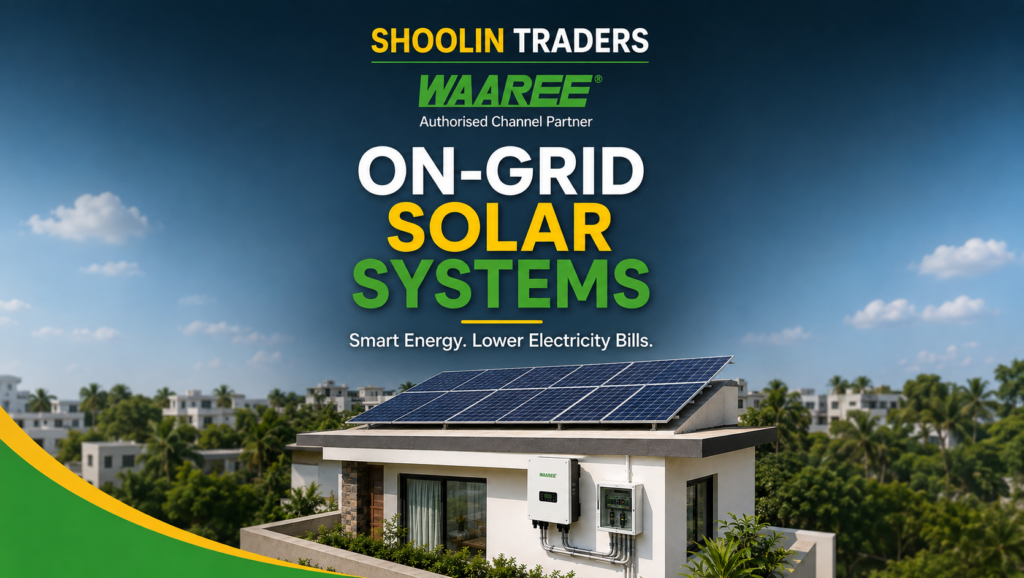
| On-grid | Is my main objective reducing grid electricity purchases? | Generation assumptions and the applicable connection arrangement |
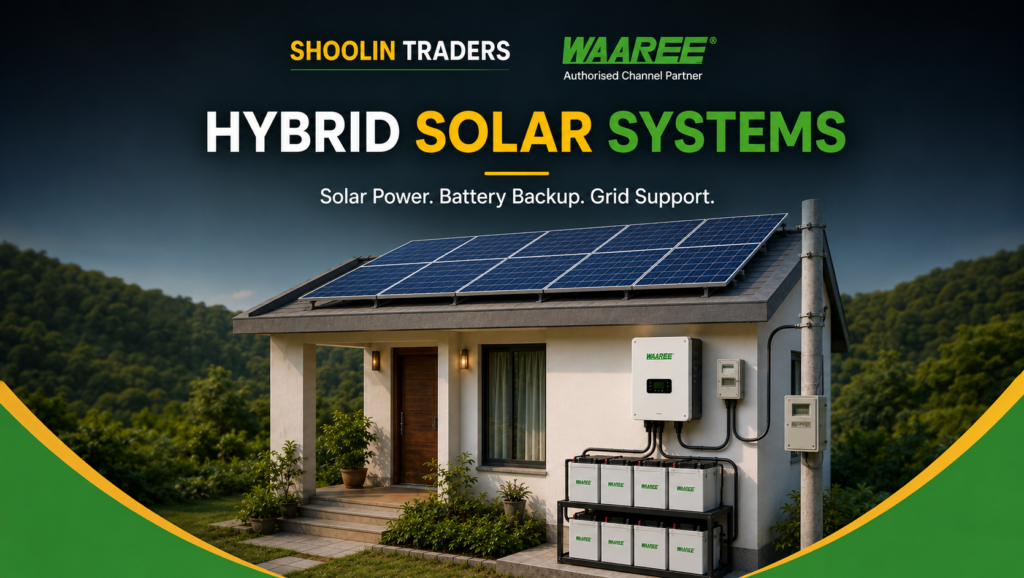
| Hybrid with storage | Which appliances must operate during an outage? | Backup circuits, battery specification and operating limits |
| Off-grid | Must the system operate independently of the utility supply? | Load schedule, storage plan and low-generation strategy |
Avoid approving a quotation merely because “hybrid” sounds more complete. Ask what the proposed equipment actually does during an outage. Confirm whether backup is automatic, which circuits receive power and what happens when the battery reaches its operating limit.
For a closer look at the options, explore Shoolin Traders’ on-grid solar systems, hybrid solar systems and off-grid solar systems.
3. Read the Capacity Description Carefully
Ask the supplier to show panel capacity and inverter rating separately. A quotation should give the number of modules, their individual rated wattage and the combined array rating. It should also identify the inverter model.
For example, six panels rated at 500 watts total 3,000 watts, or 3kW, of nominal panel capacity. This arithmetic describes the equipment rating; it does not promise constant output or a particular monthly saving.
Check whether competing quotations use the same basis when describing system size. If they differ, request an explanation. A comparison becomes easier when panel quantity, module rating, inverter specification and optional storage appear as separate line items.
Ask why the proposed capacity fits your property. The response should connect the recommendation to your consumption, intended use, available roof and relevant connection conditions. Keep a record of that explanation alongside the quotation.
4. Ask for Exact Panel and Inverter Models
A brand name is useful, but an exact model is more useful. Request the panel manufacturer, model reference, quantity, rated wattage and datasheet. Make sure the final order identifies the equipment that will actually be supplied.
If you are discussing Waaree panels, ask which specific model is included. Do not assume every panel sold under one brand has the same dimensions, electrical specifications or warranty. Ask the installer to confirm that the chosen panel and inverter combination is suitable for the proposed layout.
The inverter line should identify its manufacturer and model, operating type and monitoring provision. Ask who sets up the monitoring account and whether you will receive access at handover. If internet access is necessary for remote monitoring, clarify how the connection will be provided.
Approve any equipment substitution in writing, recording the replacement model, price and warranty details.
5. Make Battery Backup a Separate Discussion
If batteries are included, request a separate backup schedule. List the appliances you expect to operate together and the approximate duration required. “Home backup” is too broad to define a purchase accurately.
Ask the proposal to distinguish battery energy capacity, usable capacity under the specified operating settings and inverter output capability. These describe different limits. A storage figure alone does not explain whether the system can run every appliance you intend to connect.
As a simple planning example, a constant 500-watt load running for four hours uses 2kWh of energy before allowing for system losses. This is an illustration of consumption, not a battery recommendation. Actual sizing needs the intended appliance schedule and equipment characteristics.
Request written information on battery location, operating requirements, warranty conditions and replacement responsibilities. If a battery is described as an optional future upgrade, ask what extra equipment or alterations that upgrade would require.
6. Review the Rooftop Survey and Mounting Scope
The proposal should show where the array will be installed and how access will be maintained. Ask for a layout that identifies the panel area, obstructions and routes for maintenance. A roof photograph covered in panel rectangles is only a starting point.
Discuss roof condition before approving installation. Existing leaks, repair requirements and access restrictions should be recorded. Ask who is responsible for assessing structural suitability and for identifying any additional professional review required for the proposed mounting arrangement.
Clarify whether the quotation includes an elevated structure, roof penetrations, waterproofing work or other civil work. If these are excluded, obtain a separate scope before treating the headline price as the total project cost.
For a Siliguri property, discuss rainy-season drainage, roof condition and maintenance access at that particular building. Ask how existing waterproofing and water-tank access will be handled. For an RCC terrace, metal shed or sloped roof, request the mounting method proposed for that surface. A generic “weatherproof” claim does not explain the installation responsibilities.
7. Check Electrical Work and Testing Responsibilities
Request a clear description of the electrical installation included in the price. The proposal should identify who designs and installs the cabling, isolation, protection and earthing arrangements appropriate to the system.
Ask whether cable routes and assumed lengths are fixed in the quotation. If the meter, inverter and roof are far apart, additional work may be necessary. Agree on how any variation will be measured and priced before installation begins.
The customer does not need to design the protection system. The useful question is whether a responsible professional has defined it and whether the required equipment, installation and testing are included.
Also ask what records will be supplied at completion. Request an agreed handover list covering equipment details, relevant test records, operating instructions and contact information for faults. If an existing electrical board requires alteration, clarify whether that work is included or separately quoted.
8. Check the West Bengal Connection and Subsidy Arrangements
First identify the electricity distribution company shown on your bill. If the connection is supplied by WBSEDCL, ask the installer to check the current WBSEDCL requirements for your consumer category and proposed system. Rules used for a project in another Indian state should not be assumed to apply to your Siliguri property.
Ask which application, inspection and metering tasks the supplier will assist with. Request a written division of responsibilities: documents you provide, work the installer performs and approvals controlled by the distribution company. Ask which official charges are included or payable separately.
If you are considering PM Surya Ghar: Muft Bijli Yojana, check current eligibility through the official government portal. Ask whether the proposed vendor, equipment and installation meet the requirements applicable to your application. A panel brand or dealer relationship alone does not establish scheme eligibility.
Show the full installation price separately from any estimated subsidy. Do not treat an anticipated benefit as approved payment, an immediate dealer discount or a promise that your electricity bill will become zero. Keep application acknowledgements, invoices and commissioning documents. This guide does not quote subsidy amounts or universal metering rules; confirm the current terms before approving the order.
9. Compare the Complete Solar Installation Quotation in Siliguri
Bring competing proposals into one comparison sheet. Mark any unclear item as “confirmation required” rather than assuming it is included. Then ask each supplier to revise the quotation against the same requirements.
| Comparison item | What to record |
|---|---|
| Panels | Manufacturer, exact model, quantity and rated wattage |
| Inverter | Manufacturer, model and intended operating configuration |
| Battery, if included | Specification, backup scope and warranty documents |
| Mounting | Proposed arrangement and included roof or civil work |
| Electrical work | Cabling, protection, earthing and board alterations |
| Applications | Installer responsibilities and customer responsibilities |
| Completion | Testing, commissioning and handover documents |
| Commercial terms | Price in INR, GST treatment, delivery, exclusions and payment milestones |
Ask suppliers to explain price differences through equipment and scope. Compare complete proposals before choosing.
10. Ask Which Costs Could Change After the Survey
A preliminary estimate and a final site-specific quotation serve different purposes. Ask which one you have received. If the roof has not been assessed, identify the assumptions that could change the price.
Useful questions include whether transport, lifting equipment, access arrangements, additional cable runs and roof repairs are included. Ask whether the price includes GST and request the tax treatment to be shown clearly. If the supplier is GST-registered, ask for its GSTIN and the appropriate invoice details. Confirm any separately payable connection charges. Do not assume one advertised tax rate applies to every supply-and-installation arrangement; request the supplier’s written breakdown.
Ask how variations will be approved. The written terms should explain whether additional work needs customer consent before it starts. Keep optional extras separate from the core installation so you can see their individual cost.
Request a quotation validity period and payment milestones in rupees. Ask for a payment acknowledgement and an invoice naming the contracting supplier. If an advance is required, confirm what it secures, equipment ordering arrangements and the applicable cancellation or refund terms. If finance is offered, review the lender’s separate written terms rather than treating the quotation as a loan approval.
11. Read Warranties as Separate Commitments
Request warranty documents for the panels, inverter and batteries, plus any installation workmanship commitment. Ask who issues each warranty and who handles the first support enquiry.
A panel product warranty and a performance warranty cover different promises under their respective terms. Neither should be presented as a guarantee of the household’s monthly savings. Keep the actual manufacturer documents and ask how warranty enquiries are handled for equipment supplied in India. For Waaree panels, request the exact model’s applicable warranty statement rather than relying on a headline number in a brochure.
Ask about exclusions, registration requirements, proof of purchase and the process for reporting a fault. Clarify whether labour, transport or replacement installation costs are covered during a claim.
For after-sales support, ask for the service contact and the process for arranging an inspection. Avoid assuming a guaranteed response time unless it appears in the agreement. If an AMC is offered, request its visit schedule, inclusions and exclusions separately.
12. Review Generation and Savings Assumptions
If the quotation includes an output forecast, ask how it was prepared. Request the assumptions and explain that you want a site-specific estimate rather than a generic number copied from another proposal.
Ask the installer to show how estimated electricity generation translates into the proposed bill reduction. The calculation should distinguish generation, electricity used at the property and any export treatment applicable to the connection.
Check whether the forecast is presented as an estimate or a contractual guarantee. If a guarantee is offered, request its precise conditions, measurement method and remedy. A confident verbal statement is not a substitute for defined terms.
For comparison, ask every supplier to use the same consumption information. Different starting assumptions can make one offer appear more attractive without reflecting a better installation. Keep the original bills with the calculation for later review.
13. Prepare for Installation and Handover
Before work begins, agree on access arrangements, the working area and communication with occupants. Ask whether any planned power interruption is necessary and how it will be communicated. Record any building restrictions that could affect installation.
At handover, use the agreed checklist. Collect invoices, equipment model and serial-number records, warranty information, operating instructions and relevant completion documents. Confirm that installed equipment matches the approved order or documented substitutions.
Ask for a demonstration of normal operation and monitoring. If backup is part of the purchase, request an explanation of the supported circuits and operating limits. Have the installer explain what you should do if a fault indication appears.
Check that you can access any account created for your system. Keep credentials securely and save the service contact in your phone. A completed installation should leave you able to identify the equipment and request support clearly.
14. Choosing a Solar Dealer or Installer in Siliguri, India
When searching for a solar dealer near you, use proximity as one part of the decision. Also ask who performs the survey, who installs the system and who manages after-sales enquiries. Documented responsibilities are more useful than a broad promise of local support.
Shoolin Traders’ website lists solar supply, installation and related system services in Siliguri. For a property in Matigara, Pradhan Nagar, Sevoke Road, Champasari, Salugara, Dagapur or Bagdogra, share the exact location and confirm survey and installation availability for your address.
Tell the team whether the enquiry concerns a complete installation, panels only or an existing system. This helps direct the discussion to the right scope. A distributor enquiry for multiple sites needs different information from a homeowner’s rooftop quotation. If you need supply only, request that scope explicitly; if you need a complete installation, ask who is responsible for the finished system and handover.
Frequently Asked Questions
Can I get a solar quotation without a site visit?
You can request an initial estimate using bills, photographs and property details. Ask which assumptions remain provisional. A final installation proposal should resolve site conditions and define the complete scope before you approve it.
Should I choose the cheapest solar installer near me?
Compare the full installation first. Check exact equipment, included work, exclusions, payment terms and support responsibilities. Price becomes meaningful once suppliers are quoting against comparable requirements.
Does a solar quotation include batteries automatically?
No. Ask whether storage is included and what it supports. If backup matters, request a battery specification and a clear list of backed-up circuits rather than relying on the phrase “solar system.”
Can a standard on-grid system power my home during an outage?
A standard on-grid system generally disconnects during a grid outage. Tell the installer if outage operation is required and ask for equipment and circuits specifically designed for that purpose.
How do I compare two Waaree panel quotations?
Compare the exact panel models, quantities, ratings and supplied warranty documents. Then compare the rest of the installation. Matching the panel brand does not make the inverter, structure or workmanship scope identical.
What should I send Shoolin Traders for an enquiry?
Send your locality, property type, electricity consumption details, roof photographs and main objective. Mention any backup requirement and planned increase in appliance use. The team can then discuss the next assessment steps.
Is an AMC included in the installation price?
Check the written quotation. Ask whether maintenance is included, optional or separately priced. Request the duration, visit arrangements and covered tasks so you can compare the offer accurately.
Is the quotation price before or after GST and subsidy?
Ask for separate figures: equipment and installation price, applicable GST, total payable amount and any estimated subsidy. The proposal should explain what you must pay and what remains subject to official eligibility and approval. Do not compare one pre-tax figure with another supplier’s total price.
Request a Rooftop Solar Quotation from Shoolin Traders
Start with your electricity use, property details and the result you want from solar. Ask for a written proposal that explains equipment, installation scope, responsibilities and exclusions. Review the answers before committing to the order.
For a solar installation quotation in Siliguri, call Shoolin Traders on +91 7585936555 or submit your enquiry. Share your location, recent electricity bills and roof photographs to make the first discussion useful.